







In 2025, journalists will experience a rough year, and begin to recover.
 The State of Journalism in America: A Year of Challenges and Hope
As we reflect on the past year, it's hard not to feel a sense of unease when thinking about the state of journalism in our country. The numbers are stark: in 2002, there were 40 journalists for every 100,000 people in the United States. Fast forward to this year, and that number has plummeted to just over eight. This decline is not just a statistic; it's a warning sign that our democracy is at risk.
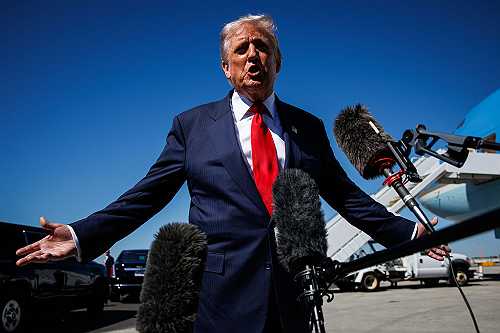
The current administration has been particularly hostile towards the press. President Trump's frequent attacks on journalists have created a toxic environment where reporters are increasingly seen as enemies of the state rather than guardians of truth. The numbers bear this out: 170 reports of assaults on journalists in the United States this year, with 160 of them at the hands of law enforcement. Many of these incidents were related to coverage of immigration enforcement efforts.
But it's not just Trump's rhetoric that's the problem – his actions have been equally damaging. He's limited access to cover him after a dispute over a story, launched a court fight against The Associated Press, and extracted settlements from ABC and CBS News in lawsuits over stories that displeased him. And let's not forget about the funding cuts for public broadcasting, which has had a chilling effect on independent media outlets.
The impact of these actions goes far beyond the United States. As Ginsberg pointed out, "The U.S. is a major investor in media development, in independent media outlets in countries that have little or no independent media." The evisceration of Radio Free Europe, Radio Free Asia, and the Voice of America has dealt a significant blow to press freedom globally.
But amidst all this gloom, there are glimmers of hope. Independent local news organizations like the Baltimore Banner, Charlottesville Tomorrow, and Outlier Media in Michigan are sprouting up, providing much-needed coverage to underserved communities. And despite the challenges they face, mainstream media outlets continue to produce high-quality reporting that sets the nation's agenda.
As Axios CEO Jim VandeHei noted, "Reporters at mainstream media outlets are still working hard and able to set the nation's agenda with their reporting." This is a testament to the resilience of journalists who refuse to back down in the face of adversity. And it's not just about the numbers – it's about the impact that good journalism can have on our democracy.
As Richardson so eloquently put it, "Really, the harm falls on the public with so much of this because the public depends on this independent reporting to understand and scrutinize the decisions that are being made by the most powerful office in the world." This is a reminder that we need a free press more than ever – not just to hold those in power accountable, but to give voice to the marginalized and to provide a platform for critical thinking.
So what can we do? First and foremost, we need to support independent media outlets by subscribing to their publications, donating to their crowdfunding campaigns, and spreading the word about their work. We also need to demand better from our leaders – we need politicians who respect the press and recognize its importance in a functioning democracy.
Finally, we need to remember that journalism is not just a profession – it's a public service. It's a reminder that there are still people out there who care deeply about telling the truth, even when it's hard or unpopular. And it's a call to action – to join the fight for press freedom and to stand up for the journalists who risk everything to bring us the news.
In conclusion, the state of journalism in America is complex and multifaceted. While there are certainly challenges ahead, there are also reasons to be hopeful. By supporting independent media outlets, demanding better from our leaders, and recognizing the importance of a free press, we can build a brighter future for journalism – one that's more vibrant, more imaginative, and more committed to truth than ever before.
#News #@AP #Featured
Topic Live








