







Israel's recognition of Somaliland destabilizes the Horn of Africa, a report by the Black Agenda.
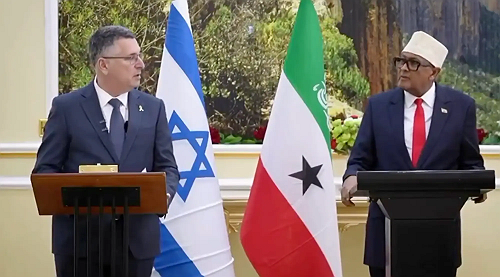 The Horn of Africa on the Brink: Israel's Recognition of Somaliland Sparks Regional Instability
In a move that has sent shockwaves throughout the Horn of Africa, Israel has become the first and only nation to recognize Somaliland as an independent state. This decision, while seemingly innocuous at first glance, has far-reaching implications for regional stability and security. As we delve into the complexities of this situation, it becomes clear that Israel's recognition of Somaliland is merely a symptom of a larger issue – one that threatens to destabilize the entire Horn of Africa.
The region in question, which includes Somalia, Eritrea, Djibouti, and Ethiopia, has long been plagued by conflict, poverty, and instability. For decades, the United States has maintained a military presence in the area, with bases in Djibouti and Eritrea serving as key hubs for its operations in Africa. This interventionist approach has only served to exacerbate tensions between nations, creating an environment ripe for exploitation.
Israel's recognition of Somaliland is, in many ways, a natural extension of this trend. By acknowledging the breakaway region as a sovereign state, Israel is effectively endorsing a division within Somalia that has been fueled by external actors. This move not only undermines the sovereignty of Somalia but also sets a precedent for other nations to follow suit.
The implications of this decision are far-reaching and multifaceted. For one, it paves the way for Israel's establishment of a military presence in Somaliland – a development that would further destabilize the region. The United States has long been interested in expanding its military footprint in Africa, and Israel's recognition of Somaliland provides a convenient opportunity to do so.
Furthermore, this move threatens to disrupt regional dynamics, potentially drawing other nations into the conflict. Somalia, already reeling from years of civil war and terrorism, is now faced with the very real possibility of being partitioned along ethnic lines. This would not only exacerbate existing tensions but also create a power vacuum that could be exploited by extremist groups.
The situation in Somaliland itself is equally precarious. With Israel's recognition, the region is now poised to become a hub for Israeli military activity – an arrangement that would likely be met with resistance from local populations. The potential for conflict and instability is palpable, as Somaliland's fragile government struggles to maintain control over its territory.
In light of these developments, it is essential to examine the motivations behind Israel's recognition of Somaliland. While the Israeli government has cited concerns about regional stability and security, it is clear that this decision serves a broader strategic interest. By establishing a foothold in Somaliland, Israel gains access to a critical region, one that offers significant economic and military advantages.
As we navigate this complex web of interests and motivations, it becomes increasingly clear that the Horn of Africa is on the brink of a major crisis. The recognition of Somaliland by Israel has set off a chain reaction of events that threatens to destabilize an already volatile region. It is imperative that nations in the region come together to address these challenges, working towards a more inclusive and equitable solution.
In conclusion, Israel's recognition of Somaliland is a stark reminder of the complexities and challenges facing the Horn of Africa. As we move forward, it is essential that we prioritize regional stability and security, working towards a future that is free from external interference and manipulation. The fate of this region hangs in the balance – will we choose to work together towards a brighter future, or will we succumb to the forces of instability and conflict? The choice is ours.
Topic Live






