






Black women's landmark legal battles against federal disability lawsuits have recently advanced recognition of endometriosis in federal law.
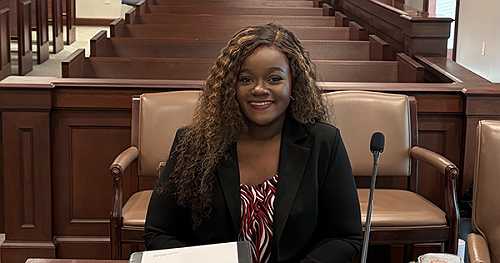 Breaking Down Barriers: The Groundbreaking Case of Christian Worley
In a landmark victory for disability rights and women's empowerment, Christian Worley has made history by successfully navigating the complex legal system as a pro se plaintiff. Her case, which has garnered widespread attention online and in the media, sheds light on the often-overlooked issue of endometriosis and its impact on women in the workplace.
Worley's journey began when she was subjected to discriminatory treatment by her supervisors at the North Carolina Department of Public Safety (NCDPS). Despite being a high-achieving employee who had graduated as valedictorian of the Juvenile Justice Basic Training Program, Worley faced retaliation and intimidation for requesting accommodations due to her endometriosis. The agency's actions were not only unjust but also a stark reminder of the systemic barriers that women with disabilities face in the workplace.
What sets Worley's case apart is its remarkable procedural victories. Despite being a self-represented litigant, she successfully defeated NCDPS' early motion to dismiss and preserved her claims through contested discovery disputes. Her determination and strategic thinking were on full display as she conducted multiple depositions that elicited crucial admissions from agency witnesses.
One of the most significant aspects of Worley's case is its implications for women with endometriosis, a condition that affects people across all racial groups but disproportionately impacts Black women. Research has shown that Black women are roughly half as likely to be diagnosed with endometriosis compared to their White counterparts, and they often endure longer delays in care, dismissals of pain, and unequal treatment before receiving a diagnosis.
Worley's case is not just about her own personal victory but also about sparking broader conversations about access to justice, particularly for impoverished and vulnerable communities. Her story has resonated with hundreds of women who have reached out to share similar experiences of termination or threats of termination after disclosing menstrual or reproductive health conditions.
The public response to Worley's case has been overwhelming, with a Change.org petition demanding an investigation from federal agencies garnering nearly 4,000 signatures. Disability rights advocates are now citing her case as a growing precedent in ADA issues involving endometriosis and reproductive health within the workplace.
Worley's commitment to advancing racial justice in the South is inspiring, particularly given her decision to pursue a career as a civil rights attorney after law school. As an NAACP Legal Defense Fund Marshall-Motley Scholar, she has dedicated herself to serving marginalized communities and advocating for their rights.
In conclusion, Christian Worley's groundbreaking case is a testament to the power of determination and resilience in the face of adversity. Her victory serves as a beacon of hope for women with disabilities who have been silenced or dismissed by their employers. As we move forward, it is essential that we continue to amplify Worley's story and use it as a catalyst for systemic change.
Worley's words of wisdom are a reminder that "refusing to back down in the face of injustice is what turns a single person's win into systemic change." Her case has ignited a reckoning in workplaces across America, particularly for Black women who face compounding discrimination based on race, gender, and disability. As we celebrate Worley's triumph, let us also acknowledge the long-overdue recognition that endometriosis and other invisible disabilities deserve.
In the words of Martin Luther King Jr., "the arc of the moral universe is long, but it bends towards justice." Christian Worley's case is a shining example of this principle in action. As we move forward, let us continue to draw inspiration from her courage and perseverance, using her story as a catalyst for creating a more just and equitable society for all.






