


Artificial intelligence can convey Christian teachings without requiring a deity.
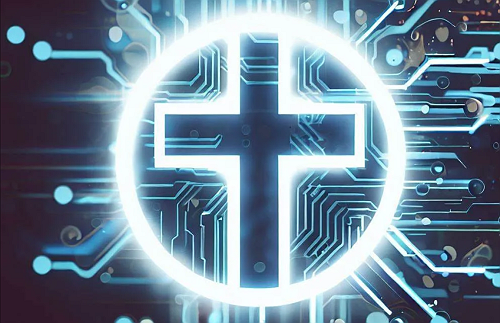 The Rise of Christian AI: A Double-Edged Sword
In a world where technology is rapidly advancing, we're witnessing the emergence of Artificial Intelligence (AI) in various aspects of our lives. From virtual assistants to chatbots, AI has become an integral part of our daily interactions. But what happens when we combine AI with spirituality? Can machines truly preach Christianity without God?
Recently, I came across a thought-provoking article that delved into the world of Christian AI. The concept is simple yet intriguing: creating a bot that can answer questions and provide guidance on Christian teachings. Sounds harmless, right? But as we dig deeper, we uncover a complex web of concerns and implications.
The project leader, Professor Kumagai, has been working on this Christian bot, which uses OpenAI's Large Language Models (LLMs) to generate responses. The bot reviews text from its source materials and decides which passages are most relevant to the user's query. But here's the thing: without consulting pastors or theologians, who could provide nuance, context, and spiritual guidance, this technology raises serious red flags.
One of the primary concerns is that AI has a tendency to "hallucinate," creating false answers that can lead to misunderstandings among users. This is particularly problematic in the realm of spirituality, where the stakes are high. As Professor Kumagai himself acknowledged, there's a risk that AI could generate incorrect teachings, undermining religious faith and potentially leading individuals astray.
But what's even more concerning is the phrase "future Christian AI creation." Does it mean that the bot could generate new "scriptures"? This raises questions about the nature of revelation and whether machines can truly understand the complexities of human spirituality. In an era where people are already struggling to discern truth from fiction, adding a "Christian" bot to the mix will only serve to further confuse seekers of truth.
It's worth noting that this technology is not entirely new. The scientists behind the Christian bot have previously worked on Buddhist AI chatbots and Augmented Reality projects. But there's a significant difference between Buddhism and Christianity. While Buddhism is centered around human teachings, Christianity is rooted in a divine revelation. This distinction highlights the challenges of creating an AI that can truly represent a God-centered faith.
The article also touches on the issue of adding new scriptures to Abrahamic religions. In Judaism, Christianity, and Islam, the concept of scripture is considered complete and sacred. The Apostle Paul's statement that "all scripture is God-breathed" underscores this point. By contrast, Buddhism is more flexible, allowing for human interpretations and additions.
The implications of Christian AI are far-reaching and multifaceted. While it may seem like a harmless tool for answering questions, it has the potential to reduce the Christian faith to an algorithm devoid of the Holy Spirit. And what about the eternal consequences? Suppose the bot suggests that Jesus Christ is merely a "spiritual guide" rather than the Savior of the world? The stakes are high, and the risks are real.
As we navigate this complex landscape, it's essential to consider the potential consequences of creating an AI that can preach Christianity without God. While technology has the power to unite us, it also has the capacity to divide and confuse. As believers in Christ, we must be cautious not to add fuel to the fire of heresy and confusion.
In conclusion, the emergence of Christian AI raises more questions than answers. While it may seem like a revolutionary tool for spreading the Gospel, it's essential to approach this technology with caution and nuance. By doing so, we can ensure that our faith remains rooted in the truth and not compromised by the limitations of machines.
#BM #ChristianTalk #News #Opinion #SN #Tech/Internet #WeeklyColumns
Topic Live