







"The The Kennedy Center's renaming has caused a new round of cancellations from artists."
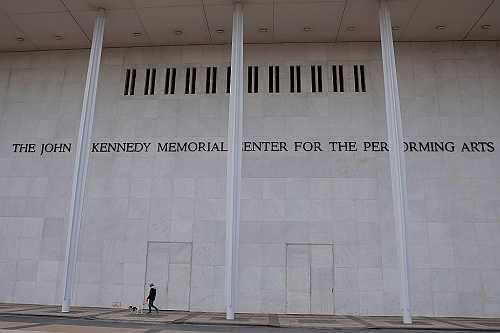 The Kennedy Center Renaming Controversy: A New Wave of Cancellations
As we step into a new year, the world of arts and culture is abuzz with controversy. The recent decision by President Donald Trump's administration to rename the John F. Kennedy Memorial Center for the Performing Arts has sparked a fresh wave of cancellations from artists who refuse to perform in a venue bearing his name.
The move, which follows an earlier backlash in spring, has left many in the arts community reeling. Performers such as Issa Rae and the producers of "Hamilton" had already canceled their scheduled engagements after Trump ousted the Kennedy Center board and named himself chairman in February. Now, with the addition of his name to the building, a new round of cancellations is underway.
At the forefront of this movement are jazz musicians who have long been associated with the Kennedy Center. The Cookers, a supergroup performing together for nearly two decades, recently announced their withdrawal from "A Jazz New Year's Eve" concert. In a statement on their website, they expressed frustration at those who may have planned to attend and emphasized their commitment to playing music that reaches across divisions rather than deepening them.
But one member of The Cookers has taken it upon himself to speak out against the renaming. Saxophonist Billy Harper, in comments posted on the Jazz Stage Facebook page, made it clear that he would never consider performing in a venue bearing Trump's name. "The same music I devoted my life to creating and advancing," he said, "is being deliberately destroyed by this administration."
Harper's sentiments are echoed by many in the arts community who see the renaming as a betrayal of the Kennedy Center's values. The institution was founded as a living memorial to President John F. Kennedy, and any changes to its name would require congressional approval. Scholars have pointed out that the law explicitly prohibits the board of trustees from making the center into a memorial to anyone else or putting another person's name on the building's exterior.
Despite these facts, Trump's handpicked board has approved the renaming, and the White House is touting it as a victory for the president. Richard Grenell, a Trump ally who was chosen to head the Kennedy Center after the previous leadership was ousted, posted on social media that "The artists who are now canceling shows were booked by the previous far left leadership." He implied that the bookings were made under the Biden administration and that the cancellations prove that the artists were unwilling to perform for everyone – even those they disagree with politically.
But Grenell's claims are disputed by many in the arts community. They point out that the Kennedy Center has a long history of hosting performances from all genres and backgrounds, and that the renaming is a clear attempt to politicize the institution. In fact, Grenell himself has been accused of using the controversy as a way to further his own career.
As the debate rages on, one thing is clear: the renaming of the Kennedy Center has sparked a new wave of cancellations from artists who refuse to perform in a venue bearing Trump's name. But it also highlights a deeper issue – the politicization of art and culture. As we move forward into this new year, it's essential that we remember the importance of artistic freedom and the need for institutions like the Kennedy Center to remain apolitical.
The controversy surrounding the Kennedy Center renaming is a complex one, with many different perspectives and opinions. But at its core, it's about something much deeper – the power of art to bring people together and transcend politics. As we navigate this challenging landscape, let us remember the words of Billy Harper: "When I return to performing, I want to ensure that the room is able to celebrate the full presence of the music and everyone in it."
The Impact on Artists
The renaming of the Kennedy Center has had a significant impact on artists who have scheduled performances at the venue. Many have canceled their engagements in protest, citing concerns about the politicization of art and culture.
One such artist is saxophonist Billy Harper, who has been a vocal critic of the renaming. In an interview with The Associated Press, he expressed his disappointment and frustration at the decision to add Trump's name to the building. "I would never even consider performing in a venue bearing a name (and being controlled by the kind of board) that represents overt racism and deliberate destruction of African American music and culture," he said.
Harper is not alone in his concerns. Many other artists have also canceled their performances at the Kennedy Center, citing similar reasons. The Cookers, a jazz supergroup, recently announced their withdrawal from "A Jazz New Year's Eve" concert, stating that they wanted to ensure that the room was able to celebrate the full presence of the music and everyone in it.
The Role of Politics
At the heart of the controversy surrounding the Kennedy Center renaming is the role of politics. The decision to add Trump's name to the building has been seen as a clear attempt to politicize the institution, and many artists have taken issue with this move.
Richard Grenell, a Trump ally who was chosen to head the Kennedy Center after the previous leadership was ousted, has been accused of using the controversy to further his own career. In an interview with The Associated Press, he stated that "The artists who are now canceling shows were booked by the previous far left leadership." He implied that the bookings were made under the Biden administration and that the cancellations prove that the artists were unwilling to perform for everyone – even those they disagree with politically.
But Grenell's claims have been disputed by many in the arts community. They point out that the Kennedy Center has a long history of hosting performances from all genres and backgrounds, and that the renaming is a clear attempt to politicize the institution.
The Future of the Kennedy Center
As we move forward into this new year, it's essential that we remember the importance of artistic freedom and the need for institutions like the Kennedy Center to remain apolitical. The controversy surrounding the renaming has highlighted the need for greater transparency and accountability in the arts community.
In an interview with The Associated Press, Billy Harper expressed his hope that the controversy would lead to a renewed focus on the importance of artistic freedom. "I want to ensure that the room is able to celebrate the full presence of the music and everyone in it," he said.
As we navigate this challenging landscape, let us remember the words of Harper: "When I return to performing, I want to ensure that the room is able to celebrate the full presence of the music and everyone in it."
#News #Politics #KennedyCenter #Featured #DonaldTrump
Topic Live






