







Iran will provide harsh response against any foreign attack if nuclear work resumes.
 The Ticking Time Bomb: Iran's Nuclear Program and the Threat of a New War
As we navigate the complex web of international relations, one country stands at the forefront of global tensions: Iran. The Islamic Republic has been a thorn in the side of Western powers for decades, with its nuclear program being a constant source of concern. In recent months, the situation has escalated to alarming levels, with President Trump and Israeli Prime Minister Benjamin Netanyahu engaging in a war of words over Tehran's alleged attempts to rebuild its nuclear capabilities.
The stage was set for this confrontation when Trump welcomed Netanyahu to his Mar-a-Lago resort in Florida last week. The two leaders held wide-ranging talks, during which they discussed the possibility of renewed military action against Iran. This came months after a 12-day air war in June that left nearly 1,100 Iranians dead, including senior military commanders and scientists. Iran's retaliatory missile barrage killed 28 people in Israel, a stark reminder of the devastating consequences of this conflict.
But what exactly is driving this escalation? According to Trump, he has "heard" that Iran is rebuilding its nuclear capabilities, a claim that Netanyahu has been pressing successive US administrations to take seriously for decades. The Israeli Prime Minister's focus on reducing threats from Iran to Israel is well-documented, with some arguing that his stance has contributed to the current tensions.
However, not everyone agrees that Iran poses an imminent threat. Samantha Vinograd, a former top Homeland Security official in the Obama administration and CBS News national security contributor, suggests that there may be a "intelligence gap" between what the US thinks Iran is doing and capable of, and what Israeli intelligence is saying on those fronts. This discrepancy raises important questions about the accuracy of intelligence assessments and the potential for miscommunication.
One thing is clear: Iran's nuclear program remains a major concern for Western powers. Despite claims that Tehran has stopped enriching uranium at any site in the country, US intelligence agencies and the United Nations' International Atomic Energy Agency have assessed that Iran last had an organized nuclear weapons program in 2003. This raises the specter of a potential breakout to a bomb, with some arguing that Iran's massive stockpile of conventional ballistic missiles poses a more immediate threat.
The consequences of another war between the US and Iran would be catastrophic. The devastating impact on civilians, infrastructure, and regional stability cannot be overstated. It is imperative that all parties involved engage in constructive dialogue to address these concerns and find a peaceful resolution.
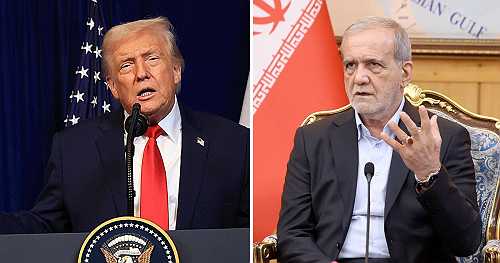
In response to Trump's warning that the US could carry out new military strikes if Iran attempts to reconstitute its nuclear program, Iranian President Masoud Pezeshkian vowed a "harsh response" to any attack. This statement came after Trump suggested that the US would "knock them down" and "knock the hell out of them" if necessary.
As we navigate this treacherous landscape, it is essential to remember that diplomacy and dialogue are often the most effective tools in resolving conflicts. The international community must come together to address these concerns and find a peaceful resolution to this crisis. The fate of global stability hangs in the balance, and it is up to us to ensure that we do not let tensions escalate into another devastating war.
In conclusion, the situation with Iran's nuclear program is a ticking time bomb that requires immediate attention. As we move forward, it is crucial that all parties involved engage in constructive dialogue to address these concerns and find a peaceful resolution. The world cannot afford another devastating conflict; it is time for diplomacy to take center stage.
Topic Live






