







"The Ivorian Government resigns after the ruling party’s landslide win."
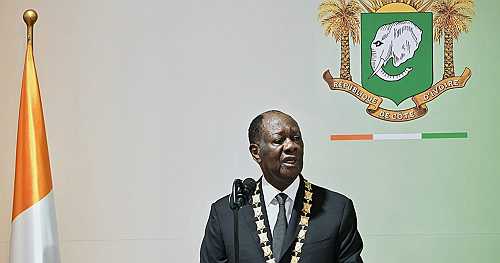 A New Era Dawns on Ivory Coast as Ruling Party Secures Landslide Victory
The West African nation of Ivory Coast has witnessed a significant shift in its political landscape with the ruling RHDP party's resounding victory in last month's legislative elections. The outcome, which saw the party secure over 75% of parliamentary seats, has led to the resignation of the government, paving the way for a new cabinet.
In a move that was both anticipated and inevitable, President Alassane Ouattara accepted the resignation of his government on Wednesday, January 7. This development marks the beginning of a new chapter in Ivory Coast's history, one that promises to bring about much-needed change and progress. The outgoing government will continue to handle day-to-day affairs until a new cabinet is named, expected by the end of the month.
The landslide victory for the RHDP party is a testament to the strong public support it enjoys. President Ouattara, who was re-elected for a fourth term with nearly 90% of the vote just two months ago, has urged his team to step up efforts to speed up development projects and improve living conditions for Ivorians. This emphasis on addressing the pressing needs of the people is a welcome move, one that holds great promise for the future.
As Ivory Coast embarks on this new journey, attention is turning to key appointments ahead. The election of a new National Assembly speaker and the possible naming of a new vice president, who would be next in line of succession, are crucial steps towards consolidating power and ensuring stability. With President Ouattara at 84 years old, it is expected that this will be his final term under the current constitution.
The significance of these developments cannot be overstated. Ivory Coast has long been a beacon of hope for West Africa, with its rich cultural heritage and economic potential. However, the country has faced numerous challenges in recent years, including political instability and corruption. The new government presents an opportunity to address these issues head-on and chart a course towards sustainable development.
One of the key areas that require attention is the economy. Ivory Coast's growth prospects have been hindered by factors such as infrastructure deficits and lack of investment in human capital. The new government must prioritize initiatives that promote economic diversification, improve access to education and healthcare, and create jobs for the youth. This will not only boost economic growth but also reduce poverty and inequality.
In addition to economic development, the new government must also focus on strengthening institutions and promoting good governance. This includes ensuring transparency in public procurement processes, combating corruption, and protecting human rights. By doing so, Ivory Coast can build trust with its citizens and create a stable environment for investment and growth.
The resignation of the government marks a significant turning point in Ivory Coast's history. As the country embarks on this new journey, it is essential that the new government remains committed to the needs and aspirations of the people. By prioritizing development projects, promoting economic growth, and strengthening institutions, Ivory Coast can emerge stronger and more resilient than ever before.
In conclusion, the landslide victory for the RHDP party and the subsequent resignation of the government present a unique opportunity for Ivory Coast to chart a new course towards progress and prosperity. As the country looks to the future, it is essential that the new government remains focused on addressing the pressing needs of its citizens and promoting sustainable development. With determination, hard work, and a commitment to the people's aspirations, Ivory Coast can emerge as a beacon of hope for West Africa and beyond.
Topic Live






