



DHS releases new footage on Minneapolis ICE shooting.
 "A City in Crisis: The Minneapolis ICE Shooting Sparks Outrage and Questions"
As I write this, the city of Minneapolis is still reeling from a tragic event that has left many shaken. A fatal shooting at an Immigration and Customs Enforcement (ICE) facility has sparked widespread outrage and protests, with thousands taking to the streets to demand justice and answers.
The incident, which occurred in the midst of sub-freezing temperatures, was met with a sense of urgency and determination by those who gathered to protest. The crowd was diverse, representing various communities and backgrounds, all united in their quest for truth and accountability. As I watched the footage of the protests, I couldn't help but feel a sense of hope and resilience emanating from the people.
At the heart of this crisis is the tragic loss of life, Renee Nicole Good, who was fatally shot by ICE agents. The incident has raised questions about the use of force by immigration authorities and the need for greater transparency and accountability in such situations. As I delved deeper into the story, it became clear that this was not just a isolated incident, but rather part of a larger narrative of tension and mistrust between law enforcement and immigrant communities.
The surge of immigration agents to the Twin Cities has been a contentious issue, with many arguing that it is an attempt to intimidate and silence marginalized communities. The presence of these agents has created a sense of unease and fear among those who feel targeted by their actions. As one observer noted, "This is not just about immigration; this is about human rights."
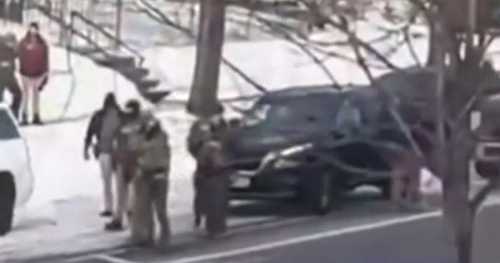
The new video released by the Department of Homeland Security (DHS) has raised more questions than answers, with many calling for greater transparency and clarity on the events leading up to the shooting. The footage shows a chaotic scene, with agents in riot gear clashing with protesters. While some have argued that the video provides evidence of the need for increased security measures, others see it as a justification for further militarization of law enforcement.
As I reflect on this crisis, I am reminded of the power of collective action and community organizing. The protests in Minneapolis are a testament to the strength and resilience of those who demand justice and accountability. In the face of adversity, these individuals have come together to create a movement that is not just about immigration policy, but about human rights and dignity.
As we move forward, it is essential that we prioritize transparency, accountability, and community engagement in our efforts to address this crisis. We must listen to the voices of those who feel marginalized and silenced, and work towards creating a more just and equitable society for all. The Minneapolis ICE shooting serves as a stark reminder of the need for greater understanding and empathy between law enforcement and immigrant communities.
In conclusion, the Minneapolis ICE shooting is a complex issue that requires a nuanced and multifaceted approach. As we navigate this crisis, let us remember the power of collective action, community organizing, and the importance of prioritizing human rights and dignity. Together, we can create a more just and equitable society for all.
Topic Live