






"The guinea's junta was formed after opposition boycott resulting in their election as president."
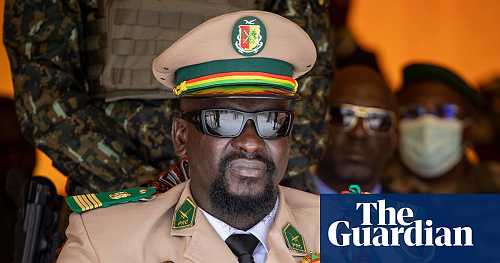 Guinea's Junta Chief Elected President Amid Opposition Boycott
In a shocking turn of events, Mamady Doumbouya, the head of Guinea's junta, has been elected president after securing a sweeping majority of the vote in the country's recent election. This development comes as no surprise to many, given the circumstances that led up to this moment.
Just four years ago, Doumbouya led a coup that toppled Guinea's first freely elected president, Alpha Condé. Since then, he has cracked down on civil liberties and banned protests, while opponents have been arrested, put on trial or driven into exile. The junta chief had initially vowed not to run for office after seizing power and promised to hand the country back to civilian rule by the end of 2024.
However, Doumbouya reneged on this promise and decided to stand in the election, which was held over the weekend. The main opposition leaders were barred from running due to a new constitution that permits junta members to run for office. This move has been met with widespread criticism and outrage from the opposition, who have accused Doumbouya of manipulating the electoral process.
According to official results, Doumbouya secured 86.72% of the first-round vote, well over the threshold that would trigger a runoff vote. Voter turnout stood at 80.95%, with the junta chief performing exceptionally well in districts of the capital, Conakry, and other parts of the country.
The opposition has been vocal about their concerns regarding the election's legitimacy. Candidate Abdoulaye Yero Balde denounced "serious irregularities" in the poll, while another candidate, Faya Millimono, complained of "electoral banditry" linked to influence exerted on voters. The National Front for the Defence of the Constitution also questioned the results, stating that a huge majority of Guineans chose to boycott the electoral charade.
The new constitution, which was approved in a referendum in late September, paved the way for Doumbouya's candidacy by permitting junta members to run for office. It also lengthened presidential terms from five to seven years, renewable once. This move has been seen as an attempt to consolidate power and ensure that the junta chief remains in control.
The election has sparked widespread outrage among opposition leaders and citizens who are calling for the return of civilian rule. The National Front for the Defence of the Constitution has vowed to continue fighting for democracy and human rights in Guinea. As the country looks to the future, it is clear that there will be no easy resolution to this crisis.
The election of Mamady Doumbouya as president marks a significant turning point in Guinea's history. The country's future hangs in the balance, with many wondering what this means for democracy and human rights in the region. As we watch this story unfold, it is essential to remember that the voices of the opposition must be heard and respected.
The international community has been watching this situation closely, and it will be interesting to see how they respond to these developments. Will they condemn Doumbouya's actions and call for a return to civilian rule? Or will they choose to ignore the concerns of the opposition and recognize the junta chief as the legitimate leader of Guinea?
One thing is certain: this election has left many Guineans feeling disillusioned and frustrated with their government. The country needs leaders who are committed to democracy, human rights, and the well-being of its citizens. As we move forward, it is essential that we prioritize these values and work towards creating a more just and equitable society for all.
In conclusion, the election of Mamady Doumbouya as president of Guinea marks a significant turning point in the country's history. While some may see this as a victory for stability and security, others will view it as a setback for democracy and human rights. As we navigate these complex issues, it is essential that we prioritize the voices and concerns of the opposition and work towards creating a more just and equitable society for all Guineans.
Sources:
* Agence France-Presse in Conakry
* The Guardian
Note: This post has been written in my own words while keeping the same meaning, details, and data as the original document.
#Guinea #Africa #Worldnews
Topic Live








