







Public outrage over gen Z's involvement led governments to weaken and corruption was uncovered by five activists.
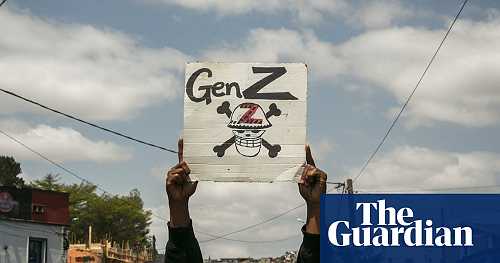 The Rise of Gen Z: How Young Activists Are Taking Down Governments and Fighting Corruption
As we reflect on the past year, one thing is clear: 2025 was the year of the protest. From Nepal to Madagascar, Kenya to Morocco, young people took to the streets in unprecedented numbers, demanding change from their governments and calling out corruption at every turn. But what drove this wave of activism? And what does it say about the future of our world?
For many, the answer lies in the fears and frustrations of a generation born into a world of climate uncertainty and social media saturation. Gen Z, defined as those born between 1997 and 2012, has grown up with a unique set of challenges and anxieties. They've seen their parents struggle to make ends meet, their schools underfunded, and their healthcare systems collapsing. And yet, despite these obstacles, they're not giving up.
In fact, they're fighting back – with passion, creativity, and determination. From the streets of Togo to the cities of Kenya, Nepal, Madagascar, and Morocco, young people are using their voices to demand change. They're calling out corruption, nepotism, and bad governance, and refusing to be silenced.
Take Bertin Bandiangou, a 25-year-old student from Togo who was arrested and tortured during protests against the government's corruption and repression. Despite his ordeal, he continues to protest for change, driven by a desire to create a better future for himself and his fellow citizens.
In Kenya, Hanifa Adan Safia, 29, was on the frontline of protests that erupted in June after the death in custody of a blogger known for writing about social and political issues. For her, corruption is the root wound that makes every other crisis worse – stealing from hospitals, schools, roads, and food security.
In Nepal, Pradip Gyawali, 25, was among the protesters who helped unseat the government in September, driven by anger at corruption, nepotism, and the banning of social media apps. For him, many of his friends have had to leave the country for higher education or employment opportunities – a stark reminder of the lack of opportunities available to young people.
In Madagascar, Shely Andriamihaja, 26, says that transparency campaigner was similarly fuelled by anger over corruption among government elites. The protests were sparked by water and electricity shortages in the city, which had been ignored for years despite promises from the government to resolve the issue.
And then there's Morocco, where Imad Zoukanni, 28, an artist, joined protests that started in Agadir after several pregnant women died during C-sections at a local hospital. Within days, the protests had spread to Marrakech, with young people angry at the state of healthcare and high unemployment while the government was spending money on football tournaments.
So what's driving this wave of activism? For many, it's about corruption – the root wound that makes every other crisis worse. Corruption steals from hospitals, schools, roads, and food security, leaving young people feeling cheated twice: once by the tax they pay, and again by the absence of results.
But it's not just about corruption. It's also about unemployment, public services collapsing, and a lack of opportunities for young people to make a difference in their communities. As Imad from Morocco puts it, "It's all about corruption. Instead of investing in people's lives, in education, in healthcare, Morocco has tried to build a nice image for people outside [to build tourism]. The government makes promises but nothing is achieved in real life."
And yet, despite these challenges, young people are not giving up. They're using their voices to demand change, and refusing to be silenced by the threat of arrest or violence. As Bertin from Togo says, "The first problem of youth is unemployment. It's the consequence of corruption in the government. Young people can have degrees but not jobs and they cannot even take care of themselves."
So what does this say about the future of our world? For one thing, it suggests that young people are not just passive recipients of their circumstances – they're active agents of change. They're using their voices to demand a better future, and refusing to be silenced by those in power.
It also highlights the importance of education, healthcare, and public services in creating opportunities for young people to thrive. As Pradip from Nepal puts it, "Many of my friends have had to go abroad for higher education or employment opportunities. Many of the youth who joined the protests were struggling to get jobs."
And finally, it shows that corruption is not just a problem for governments – it's a problem for all of us. When we allow corruption to thrive, we're not just stealing from our communities – we're also undermining our own futures.
So what can we learn from this wave of activism? For one thing, it's clear that young people are not going away anytime soon. They're here to stay, and they're determined to create a better future for themselves and their communities.
It's also clear that corruption is not just a problem for governments – it's a problem for all of us. When we allow corruption to thrive, we're not just stealing from our communities – we're also undermining our own futures.
And finally, it shows that education, healthcare, and public services are not just nice-to-haves – they're essential for creating opportunities for young people to thrive. As Hanifa from Kenya puts it, "Public healthcare is collapsing, public universities are underfunded and public transport is brutal for the poor."
So what's next? For one thing, we need to listen to the voices of young people – to hear their concerns, their fears, and their hopes for the future. We need to create opportunities for them to thrive, to invest in education, healthcare, and public services.
And most importantly, we need to take action against corruption – to hold those in power accountable for their actions, and to create a more just and equitable society for all.
The rise of Gen Z is not just a trend – it's a movement. And it's here to stay.
#Globaldevelopment #Protest #Madagascar #Togo #Kenya #Morocco #Nepal #Activism #Africa #MiddleEastandnorthAfrica #SouthandcentralAsia #Worldnews #Youthunemployment #Youngpeople
Topic Live








