







These notable works will be accessible to the public beginning in 2026.
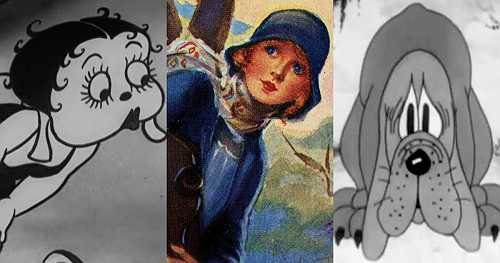 The Public Domain Revolution: Thousands of Creative Works Enter the Public Sphere
As we bid adieu to another year, a significant milestone is upon us. In 2026, thousands of creative works will enter the public domain, marking a new era for artists, writers, and creators around the world. This momentous occasion has been years in the making, and its implications are far-reaching.
For those who may not be familiar with the concept, the public domain refers to the realm where creative works are free from copyright restrictions. When a work enters the public domain, it means that anyone can use, adapt, or build upon it without needing permission or paying royalties. This is not just about old movies and books; it's about the very fabric of our cultural heritage.
According to experts, the U.S. Constitution's intellectual property clause was designed to promote progress in science and the arts by granting creators temporary monopolies on their work. However, this protection comes with an expiration date. Works published or registered before 1978 retain copyright protections for 95 years, while later works are protected for the creator's lifetime plus 70 years.
As we approach the new year, a significant number of works from 1931 will see their copyrights expire. This includes some of the most iconic films in history: Universal Pictures' "Frankenstein" and "Dracula," Charlie Chaplin's "City Lights," Fritz Lang's "M," and Herman Hupfeld's jazz standard "As Time Goes By." These classics have captivated audiences for generations, and now they will be free to inspire new creators.
But what does this mean in practical terms? For one, it means that artists can draw inspiration from these works without fear of lawsuits or royalties. It also opens up opportunities for adaptation, reinterpretation, and innovation. Imagine a new generation of filmmakers reimagining "Frankenstein" with fresh perspectives and technologies.
However, it's essential to note that just because a work enters the public domain doesn't mean that all uses are permissible. The example of Betty Boop is instructive: while the original character from 1930 is in the public domain, later versions are still protected by copyright. This highlights the importance of understanding the nuances of intellectual property law.
The public domain revolution has far-reaching implications for creators, educators, and the general public. It's an opportunity to revisit and reinterpret our cultural heritage, to breathe new life into classic works, and to inspire a new wave of creativity. As Jennifer Jenkins, director of Duke University's Center for the Study of the Public Domain, so aptly put it: "The public domain really is the soil for future creativity."
As we welcome 2026 with open arms, let us celebrate this momentous occasion. Let us recognize the value of our shared cultural heritage and the boundless potential that lies within it. The public domain revolution is not just about old movies and books; it's about the very essence of human creativity and innovation.
So, what will you create in 2026? Will you draw inspiration from these classic works or forge new paths? Whatever your passion, remember that the public domain is a treasure trove waiting to be explored. Join the revolution and let the creative possibilities unfold!
Topic Live








