







"Two weeks of data analysis has shown targeting questions remain unresolved, with uncertainty about US airstrikes' impact on Nigeria's stability and security."
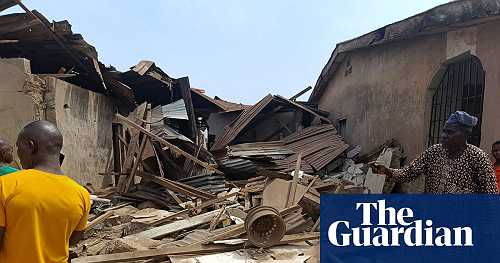 The Unanswered Questions Surrounding US Airstrikes in Nigeria
As we navigate the complexities of global politics, it's not uncommon for questions to arise surrounding military interventions. However, when it comes to the recent US airstrikes in north-west Nigeria, a plethora of unanswered questions has left many scratching their heads.
Two weeks have passed since the Christmas Day airstrikes, and despite claims from Donald Trump that "ISIS Terrorist Scum" were targeted, very little information has been shared about the operation's impact. The lack of transparency is not only concerning but also raises more questions than answers. What exactly was the target? How many fighters were killed or injured? And what are the long-term consequences of these airstrikes?
The group in question, Lakurawa, operates in a rural and underdeveloped area near the Niger border. While they have been accused of enforcing a strict version of sharia law, it's unclear why the US specifically targeted them. Most violence in the region is perpetrated by armed gangs known as bandits, leaving many to wonder if this was simply a case of mistaken identity.
Trump had previously accused the Nigerian government of failing to stop the killing of Christians, an important theme for his evangelical base. Two US officials told the New York Times that the airstrikes were a one-off aimed at allowing Trump to claim he was going after a group that had killed Christians. This raises serious questions about the motivations behind these airstrikes and whether they were truly carried out in the interest of national security or simply as a means to appease a particular constituency.
Murtala Abdullahi, a Nigerian security consultant, suggests that Lakurawa may have been targeted for symbolic reasons rather than any concrete evidence linking them to attacks on Christians. "How do you establish a link that [a] bandit group has been hitting the Christian community?" he asks. This is a valid question, especially considering the lack of information about Lakurawa's activities and the fact that they operate in an area where most violence is perpetrated by armed gangs.
Abdullahi also raises another important point: why was Lakurawa targeted instead of Boko Haram, which is far more notorious internationally and attacks both Christians and Muslims? This question highlights the complexities of global politics and the often-muddled motivations behind military interventions.
The airstrikes have also sparked renewed interest in Venezuela, where US forces abducted Nicolás Maduro on January 3rd, and Greenland, where Trump and other senior US officials have expressed renewed interest in a US takeover. It's clear that the world is watching with bated breath as these events unfold.
But what about Lakurawa itself? Very little is known conclusively about the group, from its inception to the number of fighters. Even the meaning of its name, which some analysts say is a Hausa pronunciation of "les recrues" ("the recruits" in French), is not an agreed fact. Nigeria designated the group as a terrorist organisation in January 2025, but some analysts say they are linked to Islamic State's Sahel branch.
Researchers agree that Lakurawa's senior members are from Mali or Nigeria, and local people in Sokoto state report that fighters speak Hausa with a foreign accent and a different language among themselves. In about 2017, Lakurawa was invited by some local communities to protect them against bandits, but the group has since turned to violent methods similar to those of the bandits.
The consequences of these airstrikes are far-reaching and complex. Military action alone has failed to quell Nigeria's numerous security crises, and it's clear that a more nuanced approach is needed. As Kato Van Broeckhoven, a United Nations Institute for Disarmament Research researcher, notes: "That coercive authority that they started asserting turned communities against them."
In the end, the unanswered questions surrounding US airstrikes in Nigeria serve as a stark reminder of the complexities and uncertainties of global politics. As we navigate this complex landscape, it's essential to remain vigilant and ask the tough questions. What are the motivations behind these airstrikes? What are the long-term consequences for the region? And what can be done to address the root causes of these security crises?
Only by engaging in open and honest dialogue can we hope to find answers to these pressing questions and work towards a more peaceful and stable world.
#Nigeria #IslamicState #Trumpadministration #USforeignpolicy #USnews #Africa #Worldnews
Topic Live






