







Iran protests cause intense anger and rising death rates after Trump renewed his warning of U.S. intervention.
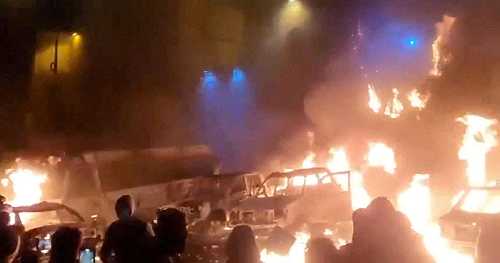 Iran's Unrest: A Brewing Storm of Protests and Power Struggles
As I write this, the world is witnessing a pivotal moment in Iran's history. The country is ablaze with protests, fueled by economic woes, government repression, and a sense of desperation among its people. The situation has reached a boiling point, with reports emerging of at least 65 fatalities and countless more injured. In this article, we'll delve into the heart of the matter, exploring the complexities of Iran's unrest and the global implications that come with it.
The protests began in late December, sparked by widespread discontent over Iran's struggling economy. The country's economic woes have been well-documented, but what's striking is how quickly these demonstrations morphed from a localized issue to a nationwide phenomenon. As the protests spread, they took on a life of their own, with demonstrators calling for fundamental change and an end to the government's authoritarian grip.
At the center of this maelstrom is the Trump administration, which has repeatedly expressed support for the protesters. This backing has been met with fierce resistance from Iran's Supreme Leader, Ayatollah Ali Khamenei. In a televised address, Khamenei lashed out at President Trump, accusing him of having "hands stained with the blood of Iranians." The Ayatollah's words were met with fervent applause from his supporters, who chanted "Death to America!" in unison.
But what's driving this unrest? For many Iranians, it's a sense of hopelessness and frustration. The country's economy is in shambles, with widespread unemployment, poverty, and corruption. The government's response has been heavy-handed, with reports emerging of security forces using live ammunition against protesters. This has only served to galvanize the opposition, who see the protests as a last-ditch effort to bring about change.
Enter Reza Pahlavi, Iran's exiled crown prince. In a bold move, Pahlavi called on protesters to overwhelm security forces and seize control of towns and cities. His words were met with enthusiasm from many in the opposition, who see him as a symbol of hope for a more democratic future.
As the situation continues to unfold, one thing is clear: Iran's unrest has global implications. The Trump administration's support for the protesters has put it at odds with Iran's government, which sees this backing as an affront to its authority. This has sparked concerns about a potential military intervention, with some analysts warning of a repeat of the 2003 invasion of Iraq.
But what would such an intervention look like? Would it bring about the change that protesters are seeking, or would it only serve to further destabilize the region? These questions hang in the balance as the world watches with bated breath.
As we reflect on this complex and volatile situation, one thing is clear: Iran's unrest is a symptom of deeper issues. The country's economic woes, government repression, and lack of democratic freedoms have created a perfect storm of discontent. It remains to be seen whether the protests will ultimately lead to meaningful change or further entrench the status quo.
One thing is certain, however: the world is watching Iran with growing concern. As we navigate this treacherous landscape, one question looms large: what's next for Iran? Will the protesters succeed in bringing about a new era of freedom and democracy, or will the government crush their spirits once again? Only time will tell.
In the meantime, we'll continue to monitor the situation closely, providing updates and analysis as the story unfolds. Stay tuned for further developments on this rapidly evolving crisis.
Topic Live






