



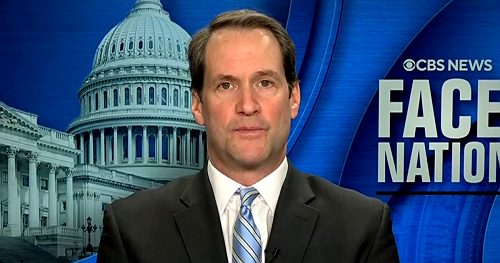
"Rep. Jim Himes states that the Maduro capture is 'clearly illegal under international law.'"
 The Maduro Capture: A Blow to International Law or a Beacon of Justice?
In a shocking turn of events, former Venezuelan President Nicolás Maduro was captured by the US in a daring operation. The news has sent shockwaves around the world, with many questioning the legality and implications of this move. As we delve into the details of this story, one thing is clear: the capture of Maduro has sparked a heated debate about international law and the role of global powers.
According to Rep. Jim Himes, the top Democrat on the House Intelligence Committee, the operation to capture Maduro was "clearly illegal under international law." Himes made these remarks on Face the Nation with Margaret Brennan, highlighting the broader implications of this move. He warned that Russia and China have taken note of this development, and it could embolden them to take similar actions in other countries.
Himes' comments are particularly noteworthy because they suggest that the US may be setting a precedent for other nations to follow. By capturing Maduro without a clear justification or international backing, the US may be sending a message that it is willing to disregard international law when it suits its interests. This could have far-reaching consequences, as Himes pointed out: "Think of what Russia and China just learned... You don't even need to make a particularly good case."
The capture of Maduro was carried out in Venezuela, where he was taken into custody by US forces. He has since been transported to New York City, where he is set to be arraigned on federal charges related to drug trafficking and working with gangs designated as terrorist organizations. While the Trump administration has hailed this operation as a success, many are questioning the legitimacy of these charges.
One of the most striking aspects of this story is the lack of clear justification for the US intervention in Venezuela. Himes noted that "there's no national security expert saying that Venezuela was a mortal threat to the United States." This raises questions about the motivations behind the capture and whether it was truly necessary.
The implications of this move are far-reaching, with many experts warning that it could embolden other nations to disregard international law. As Himes so aptly put it: "So what China and Russia just learned is that the beacon of liberty and rule of law in the world has now green lighted snatch-and-grab operations in Estonia, in Taiwan, wherever Xi and Putin decide they want to go next."
This development has significant implications for global politics and international relations. As we navigate this complex landscape, it's essential to consider the potential consequences of such actions. Will this move set a precedent for other nations to follow, or will it be seen as an isolated incident? Only time will tell.
In conclusion, the capture of Maduro is a complex issue that raises important questions about international law and global politics. While some may see this move as a victory for justice, others are concerned about the implications for international relations. As we continue to navigate this uncertain landscape, it's essential to consider the potential consequences of such actions and to prioritize transparency and accountability.
What do you think? Share your thoughts on the capture of Maduro and its implications for global politics. Is this a blow to international law or a beacon of justice? Let us know in the comments below!
---
This article is part of our ongoing coverage of global news and events. Stay tuned for more updates, analysis, and insights from around the world.
Related Stories:
* Venezuelans in Denver React to Maduro's Capture
* Protest Held Outside Brooklyn's MDC After Maduro's Capture
* Mass. Lawmakers Respond to US Capturing Venezuela's Nicolás Maduro
Follow us on social media for the latest updates and analysis:
* YouTube
* X
Subscribe to our newsletters and podcasts for in-depth coverage of global news and events:
Topic Live