

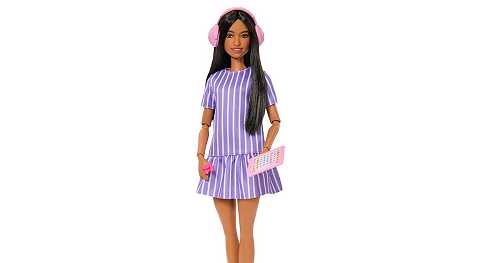
Barbie Bding-Bingling with autism is now produced by Mattel.
 Breaking Down Barriers: Mattel's Groundbreaking New Barbie with Autism
In a move that is being hailed as a major step forward in promoting inclusivity and acceptance, toy giant Mattel has announced the launch of a new Barbie doll designed specifically for children on the autism spectrum. This groundbreaking new addition to the iconic fashion doll line is the result of an 18-month collaboration between Mattel and the Autistic Self Advocacy Network (ASAN), a nonprofit organization dedicated to advocating for the rights and better representation of individuals with autism.
The new Barbie doll, which hits stores this week, is more than just a toy – it's a powerful symbol of acceptance and understanding. By creating a doll that reflects some of the unique experiences and challenges faced by people with autism, Mattel is sending a clear message: every individual deserves to be seen and celebrated, regardless of their abilities or disabilities.
But what makes this new Barbie so special? According to Noor Pervez, community engagement manager at ASAN and one of the key partners in the project, the goal was not to create a doll that "looks like" autism, but rather to show some of the ways that autism can express itself. This is no easy task, given the complexity and variability of the disorder. As Pervez notes, "autism doesn't look any one way," making it challenging to represent in a single doll.
So how did Mattel approach this challenge? By working closely with ASAN and incorporating feedback from autistic individuals themselves, the company was able to create a doll that is both authentic and empowering. One of the most striking features of the new Barbie is her slightly shifted gaze – a nod to the fact that some people with autism may avoid direct eye contact. This subtle detail may seem small, but it's a powerful acknowledgment of the unique experiences and challenges faced by autistic individuals.
But the new Barbie doll is not just about aesthetics – it's also about accessibility. By incorporating articulated elbows and wrists, Mattel has created a doll that can be used to demonstrate stimming behaviors, such as hand flapping or other gestures that some people with autism use to process sensory information or express excitement. This thoughtful design choice sends a clear message: autistic individuals are not broken or in need of "fixing" – they simply experience the world in their own unique way.
The launch of this new Barbie doll is being hailed as a major victory for the autism community, and it's easy to see why. By creating a toy that celebrates diversity and promotes acceptance, Mattel is helping to break down barriers and challenge stereotypes. As Pervez notes, "this doll is not just about autism – it's about showing that every individual deserves to be seen and celebrated."
So what does this mean for the future of inclusivity in toys? The launch of the new Barbie doll is a major step forward, but it's also just the beginning. By working closely with autistic individuals and organizations like ASAN, Mattel has shown that it's committed to creating products that are not only fun and engaging, but also empowering and inclusive.
As we celebrate this groundbreaking new addition to the Barbie line, let's remember that every individual deserves to be seen and celebrated – regardless of their abilities or disabilities. By embracing diversity and promoting acceptance, we can create a more inclusive and compassionate world for all.
Topic Live