




The Dark Side of AI: How 'AI Slop' is Rewriting History on Holocaust Remembrance Day
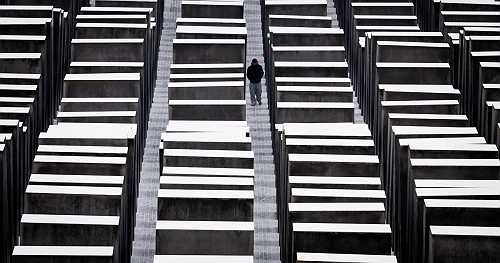 As the world marks International Holocaust Remembrance Day, a disturbing trend has emerged that threatens to distort the memory of Nazi crimes and the millions of Jewish people killed during World War II. A flood of 'AI slop' - fake content generated by artificial intelligence - is flooding social media platforms, spreading revisionist narratives and trivializing the atrocities committed during the Holocaust.
The Rise of AI Slop
Early examples of AI-generated content emerged in the spring of 2025, but by the end of the year, it was being shown very frequently on social media platforms. Historian Iris Groschek told AFP that some sites were posting examples of such content once per minute, while Jens-Christian Wagner, director of the foundation that manages the Buchenwald and Mittelbau-Dora memorials, warned that the phenomenon is growing exponentially with advances in AI technology.
Distorting History
The AI-generated content being spread on social media platforms includes images of seemingly well-fed prisoners meant to suggest that conditions in concentration camps weren't really that bad. Other examples include a viral image of a little girl with curly hair on a tricycle falsely presented as a 13-year-old Berliner who died at the Auschwitz extermination camp. Such content is not only distorting history but also has very concrete consequences for how people perceive the Nazi era.
The Consequences
Experts warn that the spread of AI-generated content is having a profound impact on younger generations, particularly those from rural parts of eastern Germany where far-right thinking has become dominant. The results are seen in the attitudes of some visitors to concentration camps, who trivialize or deny the atrocities committed during the Holocaust. German Culture Minister Wolfram Weimer echoed this concern, stating that making money from such imagery should be prevented and that platform operators have a particular responsibility in this regard.
A Call to Action
Several Holocaust memorials and commemorative associations issued an open letter warning about the rising quantity of AI-generated content. They called on social media platforms to proactively combat such content, exclude accounts that disseminate it from monetization programs, and clearly label AI-generated images. The memorials also urged platform operators to develop ethical and historically responsible standards for this technology.
As the world marks International Holocaust Remembrance Day, it is essential to acknowledge the threat posed by AI-generated content to the memory of Nazi crimes and the millions of Jewish people killed during World War II. The spread of 'AI slop' must be stopped, and social media platforms must take responsibility for ensuring that their users are not exposed to revisionist narratives or trivialized versions of history.
Topic Live