




Trump's policies in Africa emphasize more trade deals with African countries and reduced political and economic openness, leading to decreased human rights.
 The Shifting Sands of US Foreign Policy: A New Era for Africa
As we bid farewell to a tumultuous year, one thing is clear – the world of international relations has never been more dynamic. And nowhere is this more evident than in the United States' approach to sub-Saharan Africa under the leadership of President Donald Trump. In a dramatic shift from the past, the US has rebranded its relationship with the continent, prioritizing trade and conflict resolution over traditional aid and democracy promotion.
This seismic change was first hinted at by Troy Fitrell, then a top state department official for the continent, during a visit to Côte d'Ivoire in March. "We no longer see Africa as a continent in need of handouts, but as a capable commercial partner," he declared, echoing the mantra of "trade, not aid" that has long been touted by US policymakers. This new approach was further solidified when Trump convened the leaders of Rwanda and the Democratic Republic of Congo to sign a peace deal in early December, promising an end to decades of fighting in the latter nation's volatile east.
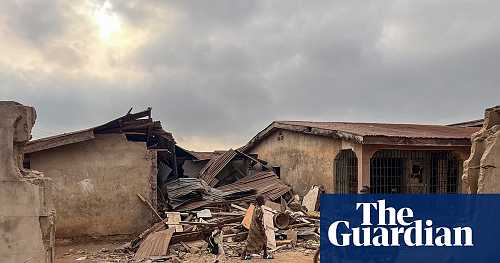
But this newfound emphasis on trade and conflict resolution has not come without controversy. The US military's Christmas Day strikes on targets linked to the Islamic State (IS) in north-west Nigeria have sparked outrage among some quarters, with critics accusing Trump of prioritizing Christian interests over human rights and democracy. Redi Tlhabi, a veteran South African journalist living in Washington DC, pointed out that this narrative aligns perfectly with US political culture's growing unease with diversity and the perceived threat it poses.
This tension is particularly evident in Nigeria, where Trump's words have had an unexpected impact on the government's response to security crises. Clement Nwankwo, executive director of the Policy and Legal Advocacy Centre thinktank in Abuja, noted that the Nigerian government has become more responsive to threats since Trump made his warning, with some even collaborating on further attacks. This raises important questions about the role of external actors in shaping local politics and the potential consequences for human rights.
Despite these criticisms, there are those who see this new approach as a welcome shift towards recognizing African agency and capacity. Obadare characterized the US's move as similar to those of its rivals Russia and China, who have deepened their involvement on the continent in recent decades. "It's a long overdue recognition of African agency," he said, "and to that extent, it represents, at least at the level of symbols, taking Africa very seriously."
But what does this mean for individual countries? According to Tlhabi, an African nation without much to offer on the table is unlikely to be on Trump's radar. This transactional posture towards Africa raises important questions about the nature of US engagement and its implications for human rights and democracy.
As we look ahead to a new year, one thing is clear – the world of international relations will continue to evolve at breakneck speed. The US's approach to sub-Saharan Africa under Trump has been marked by contradictions and controversy, but also a willingness to adapt and innovate. Whether this new era will bring about lasting change or simply perpetuate existing power dynamics remains to be seen.
One thing is certain, however – the stakes have never been higher for African nations and their leaders. As they navigate this complex landscape, it's essential that they prioritize their own interests and values, rather than getting caught up in the shifting sands of US foreign policy. By doing so, they can ensure a brighter future for themselves and their people, one that is built on mutual respect, cooperation, and a deep understanding of the continent's unique needs and aspirations.
In conclusion, the US's approach to sub-Saharan Africa under Trump has been marked by a seismic shift towards trade and conflict resolution. While this new era brings both opportunities and challenges, it's essential that African nations prioritize their own interests and values in order to navigate this complex landscape successfully. As we look ahead to a new year, one thing is clear – the future of US-Africa relations will be shaped by the choices made by leaders on both sides of the Atlantic.
#Africa #DonaldTrump #Foreignpolicy #Nigeria #Rwanda #DemocraticRepublicoftheCongo #SouthAfrica
Topic Live