




Cremations in Africa are believed to be among the oldest, with pyramidal urns containing world's oldest adult remains.
 Unveiling the Secrets of Ancient Africa: A 9,500-Year-Old Cremation Pyre Reveals a Complex Society
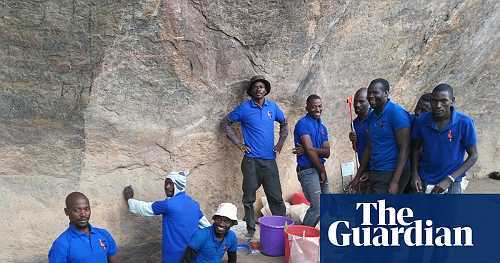
Imagine walking into a rock shelter at the foot of Mount Hora in northern Malawi, surrounded by the remnants of a civilization that thrived over 9,500 years ago. The air is thick with history as you gaze upon the remains of a cremation pyre, a testament to the intricate rituals and social complexities of ancient African hunter-gatherer groups. This remarkable discovery, recently unearthed by a team of researchers, has left us with more questions than answers about the lives of our ancestors.
The pyre, estimated to be around 9,500 years old, is considered one of the oldest in the world to contain adult remains. The research team, led by Dr. Jessica Cerezo-Román from the University of Oklahoma, has made a groundbreaking find that sheds light on the lives of these ancient hunter-gatherers. As they excavated the site, they uncovered 170 individual human bone fragments, which belonged to an adult woman approximately 1.5 meters (5 feet) tall. The team's findings suggest that this woman was given special treatment in death, with her body parts possibly removed as part of a funerary ritual.
The researchers propose that some of the missing bones may have been deliberately taken as tokens for curation or reburial elsewhere. This theory is supported by the discovery of small collections of bones from different individuals found at the site. The team also found flakes and points from stone-knapping within the pyre, which might have been added as part of a funeral ritual. One possibility is that people were knapping stones to cut the woman's flesh, raising questions about the level of knowledge and skill required for such an act.
The cremation pyre itself was approximately the size of a queen-sized mattress, indicating that it would have taken considerable knowledge, skill, and coordination to build and maintain. The two clusters of bones suggest that the body was moved during cremation, adding another layer of complexity to this ancient ritual. While it is unclear why the woman was given such special treatment, the team found evidence of multiple campfires at the site, suggesting that the rock shelter was used for both daily life and funerary purposes.
This discovery has significant implications for our understanding of ancient African societies. The oldest known pyre containing human remains was previously found in Alaska, dating back around 11,500 years ago – but it belonged to a young child. In contrast, this Malawian pyre is the earliest confirmed intentional cremation in Africa, predating previous finds by over 6,000 years. The fact that different people merited different treatment in death suggests that these ancient hunter-gatherers had a complex social hierarchy, with individuals holding various roles and responsibilities.
The team's findings have sparked excitement among archaeologists and anthropologists, who are eager to learn more about the lives of our ancestors. As Dr. Jessica Thompson from Yale University notes, "This discovery suggests that in life, they also would have had a lot more complexity to their social roles than I ever imagined." The rock shelter at Mount Hora has revealed a rich tapestry of human history, one that challenges our previous assumptions about the lives of ancient hunter-gatherers.
As we continue to unravel the secrets of this 9,500-year-old cremation pyre, we are reminded of the importance of preserving and protecting our cultural heritage. This remarkable discovery serves as a testament to the ingenuity and creativity of our ancestors, who lived in harmony with nature and developed complex societies that thrived for thousands of years.
The story of the Malawian rock shelter is one of mystery, intrigue, and awe-inspiring complexity. As we delve deeper into the lives of these ancient hunter-gatherers, we are reminded of the importance of respecting and honoring our ancestors' traditions and rituals. This discovery has left us with more questions than answers, but it has also sparked a sense of wonder and curiosity about the human experience.
As we look to the future, let us continue to explore and learn from the past. The secrets of the Malawian rock shelter await us, and it is up to us to uncover them. Will you join me on this journey into the heart of ancient Africa?
#Anthropology #Archaeology #Worldnews #Africa #Malawi #Science
Topic Live