




That someone in Gambia is attempting to overturn the ban on female genitalia among males as heard by the Supreme Court.
 The Backlash Against Women's Rights: A Global Concern
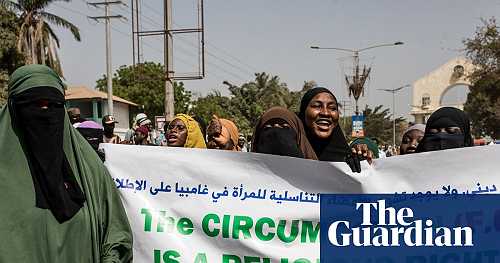
As we navigate the complexities of our world today, it's disheartening to witness a growing trend that threatens to undermine the progress made towards women's empowerment. The latest development in this regard is the attempt by Muslim leaders and an MP in the Gambia to overturn the ban on Female Genital Mutilation (FGM) at the country's supreme court. This move, which comes after two babies bled to death following FGM procedures last year, has sparked widespread concern among activists and lawyers who see it as part of a global backlash against women's rights.
The Gambia, with its staggering 75% rate of FGM among women aged 15-49, is one of the countries where this practice is most prevalent. The procedure, which involves the partial or total removal of external female genitalia, has severe long-term health consequences, including infertility. It's a grave violation of human rights that is performed solely for cultural or religious reasons, despite having no medical basis.
The attempt to overturn the ban on FGM in the Gambia is not an isolated incident. Rather, it's part of a larger trend that's eroding gender protections across the world. In 2024, a bill to decriminalize FGM was tabled by Almameh Gibba, an MP and one of the plaintiffs, but it was rejected by the country's parliament. This move has been met with outrage from activists who see it as a regressive step that undermines women's rights.
Fatou Baldeh, founder of the Gambian rights organization Women in Liberation & Leadership, aptly captures the essence of this concern when she says, "FGM is a strong manifestation of violence against women that harms their physical and psychological health. If this issue is still being debated at a national level, it shows us that women's rights are really regressing." This sentiment is echoed by activists worldwide who see this as part of a global regression on women's rights.
The Gambia's president, who signed into law the Child Rights Act 2025, which did not ban FGM, has been criticized for his inaction. Baldeh notes that "it speaks volumes that he refused to act on the ruling." This lack of action is all the more concerning given the presence of beautiful protocols and treaties protecting women and girls within the region.
The attempt to overturn the ban on FGM in the Gambia is not an isolated incident, but rather part of a larger trend that's eroding gender protections across the world. In Afghanistan, the Taliban is eroding any rights women had before they seized power; in the US, restrictions on access to abortion and contraception services are increasing; and in Iran, women are key targets of the regime.
A report by Equality Now highlights new legislative proposals in Bolivia and Uruguay that threaten to weaken protections against sexual violence. Civil society organizations face increasing pressure under repressive laws, such as in India and Kyrgyzstan, while government bodies responsible for advancing women's rights are being dismantled in South Korea and Argentina.
As we navigate this complex landscape, it's essential to recognize the interconnectedness of these issues. The attempt to overturn the ban on FGM in the Gambia is not just a local concern but part of a global trend that threatens to undermine women's empowerment. It's time for us to come together and demand action from our leaders.
We must acknowledge the progress made towards women's rights, but we cannot afford to be complacent. The fight for women's empowerment is far from over, and it requires collective effort and determination. As we move forward, let's remember that every step backward threatens to erase the hard-won gains of the past.
It's time for us to stand together and demand action from our leaders. We must recognize the value of women's rights and the importance of protecting them. The attempt to overturn the ban on FGM in the Gambia is a wake-up call that we cannot ignore. Let's rise to the challenge and ensure that women's rights are protected for generations to come.
What can you do?
* Share this article with your network to raise awareness about the issue.
* Contact your local representatives and demand action on women's rights.
* Support organizations working towards women's empowerment, such as Women in Liberation & Leadership.
* Educate yourself and others about the importance of protecting women's rights.
Together, we can make a difference.
#Globaldevelopment #Femalegenitalmutilation(FGM) #Women #Health #Globalhealth #Violenceagainstwomenandgirls #Anti-rightsmovement #TheGambia #Society #Africa #Worldnews #Humanrights #Women #Lifeandstyle
Topic Live