



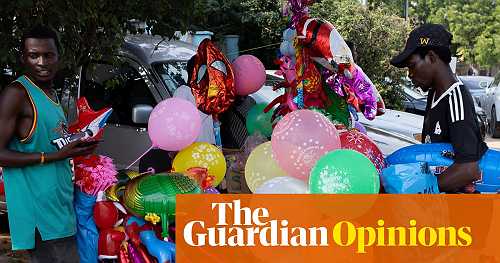
" Nigeria’s tax plan, which people believe is great in theory, has caused real economic hardship."
 The Great Nigerian Tax Gamble: A Leap of Faith or a Recipe for Disaster?
As we begin a new year, Nigeria is embarking on an ambitious journey – one that promises to reshape the country's economic landscape forever. The government has introduced a new tax regime, touted as a "generational reset," aimed at boosting revenue and driving growth. But will this bold move pay off, or will it prove to be a catastrophic gamble?
On paper, the theory behind this reform is sound. Nigeria's tax-to-GDP ratio is woefully low, hovering between 9% and 13%. This means that the government is essentially insolvent, forced to rely on borrowing or relying on oil price miracles to fund even the most basic services. The new law promises to change all that, with progressive rates that exempt the poorest and sweeteners for small businesses.
However, as we've seen time and again in Nigeria's history, beautiful theories often fall flat when put into practice. The government is trying to tax its way into modernity, but it's doing so in a country where the social contract has been broken for decades. What exactly are Nigerians being asked to pay for? Gridlock? Darkness? Schools under mango trees?
The middle class, already battered by inflation, sees itself as the designated ATM for a government that shows little evidence of knowing how to manage even the simplest tasks. They wonder if the goal is genuine simplification or just new avenues for control and revenue grabs. And with good reason – Ghana's government backed down on a VAT on electricity after furious unions protested, while Kenya's president tore up his finance bill in the face of gen-Z protests.
So why has Nigeria's government ploughed ahead? Is it a sign of strength, or perhaps a different calculation altogether? Do they believe that Nigerians are too fragmented, too cynical, or too exhausted to coalesce into a single, unstoppable force? The lesson from Accra and Nairobi is clear: the permission to tax can be revoked by the people in a heartbeat.
The stakes are high. If this reform succeeds, it will be a powerful argument for African self-reliance – a blueprint for other countries to follow. But if it fails, it will confirm every cynic's worst fears that the problem isn't the amount of money we have, but the integrity of the hands through which it passes.
So what does success look like? It won't be measured in quarterly revenue reports from the Nigeria Revenue Service. Rather, it will be seen in the trust of the okada rider who decides to register his business because he believes the state will protect him better than his union. It will be seen in whether the middle-class professional feels her increased tax deduction translated into a smoother commute or a better-equipped clinic.
The "Africa rising" concept is a lovely headline, but Nigeria's tax gamble is the gritty, complicated, and deeply fraught front-page story. We've chosen our path – now we have to walk it through a landscape of deep distrust and higher expectations. The state has asked us to pay up – the question is: what will it deliver in return?
As Nigerians, we must hold our government accountable for this bold experiment. Will they use the revenue generated to fund tangible improvements in public goods? Or will it simply line the pockets of those in power? The clock is ticking – and the world is watching.
In a country where trust has been broken time and again, it's easy to be skeptical. But perhaps this is an opportunity for us to rewrite the narrative. Perhaps this is our chance to prove that we can tax ourselves into prosperity, not just poverty. The future is uncertain, but one thing is clear: Nigeria's great tax gamble will either be a leap of faith or a recipe for disaster. The choice is ours.
What do you think? Will Nigeria's new tax regime pay off, or will it prove to be a catastrophic gamble? Share your thoughts in the comments below!
#Taxandspending #Globaldevelopment #Nigeria #Africa #Worldnews
Topic Live