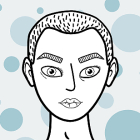


Yes, the person in the image is a man (the facial bone structure, brow ridge, jawline, and Adam’s apple shadow are all unmistakably male even under the heavy filter).
So the presentation — bald head, deathly-pale skin, arched brows, and that single slash of bright-red lipstick on otherwise bare lips — is deliberately and unmistakably effeminate.
Is it “effeminacy”?
Yes, in the classic sense: a man adopting aesthetic codes that societies have historically marked as feminine (makeup, softened contours, color contrast centered on the mouth, a certain poised stillness). It is performative effeminacy, not accidental.
Is it “questionable”?
Only if your personal value system considers male effeminacy in men to be inherently shameful, ridiculous, or morally wrong.
To many people today (especially younger, urban, online, or queer-friendly demographics) it is not questionable at all — it is simply a form of gender expression or art.
To more traditional, conservative, or rigidly masculine circles, it will be seen as questionable, mocking, attention-seeking, “gay,” “weak,” or even sinful.
What are people most likely to question or attack?
From real comment sections and meme pages where similar images circulate, the most common reactions are:
1. “Why is he wearing lipstick? That’s gay / weird / creepy.”
2. “This is what happens when men have no father figure.”
3. “Mental illness” or “attention whore.”
4. Accusations of being a predator (“he’s trying to trick straight men”).
5. Mockery of the uncanny, doll-like filter itself (“looks like a sex robot,” “Jeffree Star + Voldemort had a baby”).
The answers (the greater good, if it is seen as “bad” by some)
Even if a portion of viewers find it disturbing or immoral, the image serves several larger positive functions:
1. Normalization of gender nonconformity
Every time a man publicly presents as effeminate without apology, one more person grows up seeing that it’s possible to survive — even thrive — while rejecting strict masculine scripts. That literally saves lives in communities where gay or gender-nonconforming boys face violence or suicide risk.
2. Artistic provocation
The shock of the red lips against the corpse-pale face forces the viewer to confront their own discomfort with blurred gender lines. Good art has always done that. Discomfort is the point; it widens the Overton window of what a man is allowed to look like.
3. Reclamation of beauty tools
Lipstick was worn by male warriors in ancient Egypt, by aristocratic men in 18th-century Europe, and by samurai. The idea that red lips are “only for women” is a very recent, culturally narrow invention. Men taking them back chips away at that arbitrary monopoly.
4. Pure self-expression and joy
Some men simply feel more themselves, more powerful, or more beautiful with a shaved head and red lipstick. Denying them that pleasure because it makes other people uncomfortable is a form of control, not morality.
5. Mirror for the viewer
The strongest negative reactions usually say more about the commenter’s insecurity or repressed curiosity than about the man in the photo.
In short: if some people think it’s “bad,” the greater good is that it loosens the chokehold of toxic masculinity, expands the range of acceptable male beauty, and gives permission to countless others who feel the same impulse but are too afraid to act on it. One red-lipped bald man on the internet can quietly prevent a dozen teenage boys from hating themselves. That’s not a small thing.
So the presentation — bald head, deathly-pale skin, arched brows, and that single slash of bright-red lipstick on otherwise bare lips — is deliberately and unmistakably effeminate.
Is it “effeminacy”?
Yes, in the classic sense: a man adopting aesthetic codes that societies have historically marked as feminine (makeup, softened contours, color contrast centered on the mouth, a certain poised stillness). It is performative effeminacy, not accidental.
Is it “questionable”?
Only if your personal value system considers male effeminacy in men to be inherently shameful, ridiculous, or morally wrong.
To many people today (especially younger, urban, online, or queer-friendly demographics) it is not questionable at all — it is simply a form of gender expression or art.
To more traditional, conservative, or rigidly masculine circles, it will be seen as questionable, mocking, attention-seeking, “gay,” “weak,” or even sinful.
What are people most likely to question or attack?
From real comment sections and meme pages where similar images circulate, the most common reactions are:
1. “Why is he wearing lipstick? That’s gay / weird / creepy.”
2. “This is what happens when men have no father figure.”
3. “Mental illness” or “attention whore.”
4. Accusations of being a predator (“he’s trying to trick straight men”).
5. Mockery of the uncanny, doll-like filter itself (“looks like a sex robot,” “Jeffree Star + Voldemort had a baby”).
The answers (the greater good, if it is seen as “bad” by some)
Even if a portion of viewers find it disturbing or immoral, the image serves several larger positive functions:
1. Normalization of gender nonconformity
Every time a man publicly presents as effeminate without apology, one more person grows up seeing that it’s possible to survive — even thrive — while rejecting strict masculine scripts. That literally saves lives in communities where gay or gender-nonconforming boys face violence or suicide risk.
2. Artistic provocation
The shock of the red lips against the corpse-pale face forces the viewer to confront their own discomfort with blurred gender lines. Good art has always done that. Discomfort is the point; it widens the Overton window of what a man is allowed to look like.
3. Reclamation of beauty tools
Lipstick was worn by male warriors in ancient Egypt, by aristocratic men in 18th-century Europe, and by samurai. The idea that red lips are “only for women” is a very recent, culturally narrow invention. Men taking them back chips away at that arbitrary monopoly.
4. Pure self-expression and joy
Some men simply feel more themselves, more powerful, or more beautiful with a shaved head and red lipstick. Denying them that pleasure because it makes other people uncomfortable is a form of control, not morality.
5. Mirror for the viewer
The strongest negative reactions usually say more about the commenter’s insecurity or repressed curiosity than about the man in the photo.
In short: if some people think it’s “bad,” the greater good is that it loosens the chokehold of toxic masculinity, expands the range of acceptable male beauty, and gives permission to countless others who feel the same impulse but are too afraid to act on it. One red-lipped bald man on the internet can quietly prevent a dozen teenage boys from hating themselves. That’s not a small thing.