




Rep. Jim Himes spoke about 'Face the Nation with Margaret Brennan' on January 4, 2026.
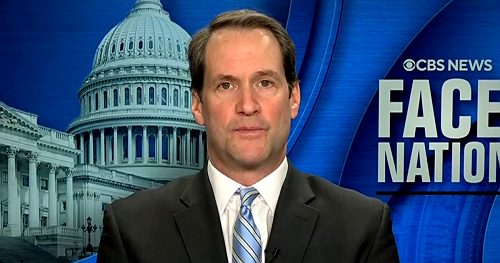 The Regime Change Conundrum: A Conversation with Rep. Jim Himes
As we navigate the complex landscape of international politics, one question continues to plague us: what does "regime change" really mean? Is it a genuine attempt to bring about positive change, or is it just a euphemism for something more sinister? In a recent conversation on Face the Nation with Margaret Brennan, Rep. Jim Himes shed some light on this very issue.
The context of the discussion was Venezuela, a country that has been embroiled in turmoil for years. The regime of Nicolas Maduro has been widely criticized for its human rights abuses and authoritarian tendencies. However, as Rep. Himes pointed out, the current administration's approach to dealing with the situation is far from clear-cut.
According to Rep. Himes, the secretary of state was recently talking about working with the regime and collaborating with indicted criminals who are still running Venezuela. This raises some serious questions: can we really call this "regime change" if we're essentially working with the same people who have been responsible for so much suffering? It's a point that Rep. Himes drives home, highlighting the inconsistency in our approach.
The conversation takes an interesting turn when Rep. Himes brings up the example of Maduro himself. The Venezuelan leader was recently indicted by the Southern District of New York, yet he continues to hold power. This is not an isolated incident; Rep. Himes notes that there have been numerous instances where individuals who have been indicted or accused of wrongdoing have received pardons and gone on to continue their nefarious activities.
The implications of this are far-reaching. If we're willing to work with individuals who have been accused of crimes, does it mean that we're essentially condoning their behavior? And what message does this send to the people of Venezuela, who are struggling for freedom and justice?
Rep. Himes' comments also touch on a broader issue: the lack of consistency in our approach to dealing with authoritarian regimes. He notes that there is no clear law or policy guiding our actions, and that it's often a case of "maybe this, maybe that." This lack of clarity can have serious consequences, both domestically and internationally.
As we reflect on Rep. Himes' words, it's hard not to feel a sense of unease. Are we truly committed to bringing about positive change in Venezuela, or are we just paying lip service to the idea? The conversation with Rep. Himes serves as a reminder that there is no easy answer to this question.
In fact, the situation in Venezuela highlights the need for a more nuanced approach to international relations. We can't simply rely on grand gestures and lofty rhetoric; instead, we need to engage in meaningful dialogue and work towards tangible solutions.
As Rep. Himes so aptly puts it, "look again, go back" – let's take a step back and re-examine our approach to dealing with authoritarian regimes. Let's strive for consistency, clarity, and a genuine commitment to justice and human rights.
The conversation with Rep. Jim Himes may have been cut short due to technical issues, but the questions he raised will linger on long after the broadcast is over. As we continue to navigate the complex world of international politics, let us remember the importance of consistency, clarity, and a genuine commitment to justice and human rights.
In conclusion, Rep. Jim Himes' conversation with Margaret Brennan on Face the Nation serves as a timely reminder of the need for a more nuanced approach to international relations. As we move forward, let us strive to be guided by a clear sense of purpose and a commitment to doing what is right – not just for our own interests, but for the sake of humanity itself.
Topic Live