




"The shocking history of the Monroe Doctrine."
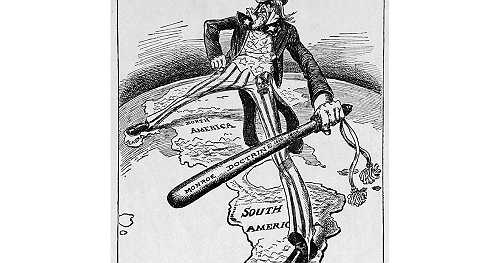 The Monroe Doctrine: A Surprising History of Power and Influence
Imagine a single statement made by a president over two centuries ago, which has had far-reaching consequences for the United States' actions in Latin America. Sounds like a plot twist from a historical novel? Welcome to the fascinating story of the Monroe Doctrine.
In 1823, President James Monroe delivered an address to Congress that would change the course of history. The three-paragraph statement was meant as a warning to European powers: stay out of the Americas! But what exactly did this mean? According to historian Jay Sexton, author of a book on the subject, it wasn't a law or statute, but simply a presidential message to Congress about foreign powers' limitations in the Western hemisphere.
Fast forward to decades later, and we see how this seemingly innocuous statement gained momentum. President James K. Polk invoked the Monroe Doctrine to justify war with Mexico in 1846, expanding U.S. territory by nearly half. This marked the beginning of a long history of using the doctrine as a justification for U.S. actions in Latin America.
But what's striking is that this "doctrine" wasn't even officially recognized until much later. It was only after Polk's use of it that the term "Monroe Doctrine" became widely accepted. This raises questions about the nature of power and influence: can a single statement, made by one person, have such far-reaching consequences?
Sexton's book sheds light on this complex history, revealing how the Monroe Doctrine has been used to justify U.S. interventions in Latin America for centuries. From the Mexican-American War to the present day, the doctrine has been invoked to legitimize U.S. actions, often with devastating consequences for local populations.
So what can we learn from this surprising history? Firstly, it highlights the importance of understanding the context and intentions behind historical events. The Monroe Doctrine was never meant as a blanket statement of U.S. dominance over Latin America; rather, it was a specific warning to European powers at a particular moment in time.
Secondly, it underscores the dangers of using historical justifications for modern actions. When we invoke the Monroe Doctrine today, are we truly honoring its original intent or simply using it as a convenient excuse? This raises important questions about accountability and the responsible use of power.
Lastly, this story serves as a reminder that history is complex and multifaceted. The Monroe Doctrine may seem like a straightforward concept on the surface, but upon closer examination, it reveals itself to be a rich tapestry of politics, power struggles, and cultural exchange.
As we reflect on this surprising history, let us remember the words of Jay Sexton: "It was simply a statement made by a president to Congress about what foreign powers could not do in the Western hemisphere. That's it." The Monroe Doctrine may have started as a simple warning, but its legacy has been anything but straightforward.
In conclusion, the Monroe Doctrine is more than just a historical footnote; it's a powerful reminder of the complex interplay between politics, power, and influence. As we navigate the complexities of our own time, let us draw lessons from this surprising history: be mindful of context, question assumptions, and strive for accountability in the use of power.
Sources:
* Jay Sexton, author of "The Monroe Doctrine: A Study in American Diplomacy"
* CBS News article on the Monroe Doctrine
Image Credits: [Insert relevant images or illustrations to break up the text]
This post is part of a series exploring the complexities of history and its relevance to modern times. Stay tuned for more thought-provoking articles and reflections!
Topic Live